
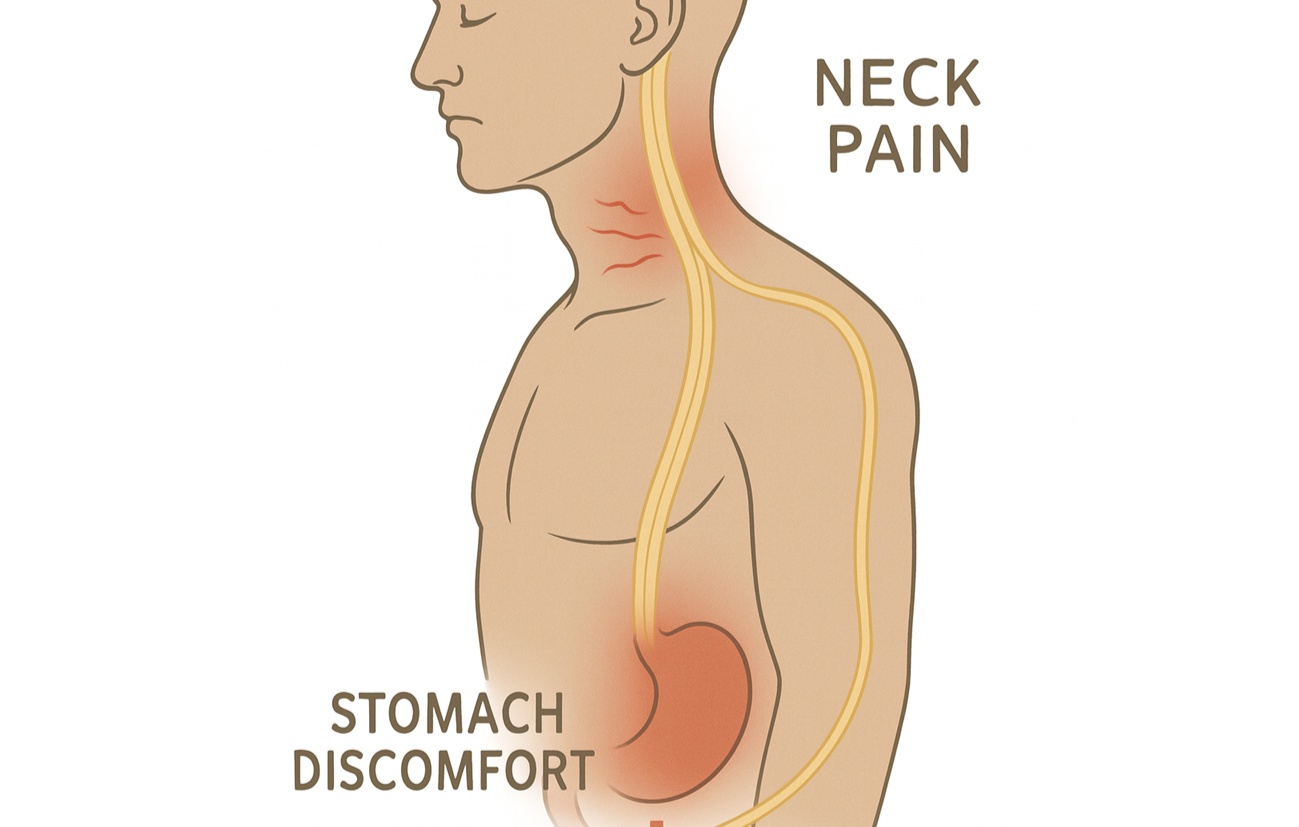
It may seem that the neck and stomach are unrelated, but they are actually connected through an intricate structure called fascia. Fascia is like a tight, full-body suit that surrounds muscles, organs, vessels, and nerves, forming a continuous tension network. Through this network, the stomach and neck maintain a surprisingly strong connection.
The fascia around the throat and esophagus travels downward through the diaphragm, and then extends and transitions into the ligaments that support the stomach and liver. This continuous pathway is often referred to as a “fascia highway.” Around the neck, this fascia anchors to the cervical vertebrae through a structure known as the fascial diaphragm.
Because of this connection, stomach discomfort, such as bloating from poor diet or emotional stress, can create abnormal tension that travels upward and eventually pulls on the neck area. It’s similar to tugging on the bottom corner of a sweater and watching the upper part shift out of shape. As a result, neck stability can be affected, leading to stiffness and pain.
The relationship also works in the opposite direction. Neck stiffness can stimulate sympathetic nerves in the cervical region. This causes muscle and blood vessel constriction that limits stomach movement and blood flow. Reduced stomach motion may lead to discomfort or loss of appetite. The vagus nerve, which controls stomach movement, also passes through the neck. Chronic neck tension can impair vagus nerve function and contribute to digestive problems.
A multidisciplinary clinic offers a comprehensive and effective approach to managing conditions. Because the cervical region, nerves, and fascial pathways influence both posture and digestion, collaboration among practitioners improves assessment and treatment outcomes.
Chiropractors and physiotherapists focus on restoring proper cervical alignment, improving joint mobility, and reducing muscular tension that may irritate the sympathetic and vagus nerves. By addressing these biomechanical issues, they help decrease nerve irritation that can influence stomach motility and digestive comfort.
Acupuncture complements this by regulating the nervous system, relieving muscle tightness, and improving digestive function through well-selected meridian points. This dual effect makes acupuncture particularly beneficial when symptoms involve both neck stiffness and indigestion.
Massage therapists address fascial restrictions and muscular tightness along the neck, diaphragm, and abdominal region. By improving tissue mobility and circulation, massage helps reduce the fascial tension that can contribute to both cervical discomfort and gastrointestinal symptoms. When these modalities are combined, the clinic can address the issue from multiple angles, i.e., structural, neurological, fascial, and systemic, leading to more complete and longer-lasting relief for patients.
If you need more information, our great team is here to help you. Please don’t hesitate to reach out to us! Book online or call at (905) 257 – 5888.